
She Has Become
The light fell thin through the curtains. He sat at the desk. Pen in hand. Notebook scarred with false starts. His handwriting drifted, halted, shrank.
He wrote what he knew.
The green scarf she wore every winter, knotted wrong on purpose.
The smell of yeast on her wrists from bread she refused to buy.
The way her laugh came from deeper than her body should’ve held.
Clear enough. But not what he reached for.
He set the pen down. Rubbed the stiff joints of his fingers. Picked it up again.
Her face
He wrote the words. Crossed them out. Tried again.
cheekbones
eyes
lips
Then nothing. Nothing after. Words sitting, pretending to be answers.
He pressed harder. As if ink could pull her back. A color? brown. Or gray. Eyes he had kissed a hundred mornings. Eyes that weren’t here now.
He turned the page. Drew instead. A circle. Two dots. A line. A child’s face. He dropped the pen. Ashamed.
He thought memory would come when called. Loyal. But it staggered. Limped. Lied.
He shut his eyes. Tried to see her. Saw her body at the sink. Hands in water. Apples. Shoulders bent. Face gone. Always gone.
He opened his eyes. Blank page waiting.
The pen dug. Ink blotted dark.
I can’t see you anymore
The line stood alone. Black. Final.
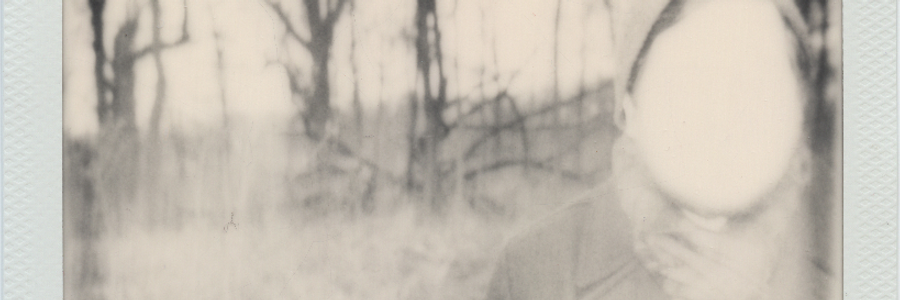
She has become faceless.
He set the pen aside. Closed the journal and sat.
Staring.
Raised a hand. Touched his own face. Just to be sure.

Worst of the Worst
The TV laughed into the living room, a game show host shouting over a wheel of prizes. Lasagna steamed on paper plates balanced across their knees.
Evan leaned forward, voice quick with conviction.
“I’m serious. After graduation I’m applying to ICE. They’re out there taking down rapists and drug traffickers every day. Protecting us. That’s something real. That’s something worth doing.”
His dad’s fork froze halfway up. “Where’d you hear that?”
“Everywhere. They’ve got videos. Press releases. I saw this one, worst of the worst, pedophiles, murderers, all of them. Look, it’s not racist. I’ve got friends who are Mexican. I’m talking about illegals. The criminals.”
His mom set her plate on the coffee table. “You know Maria from church?”
Evan frowned. “Yeah.”
“She cleaned houses for years before she could get papers. Raised two kids on her own, worked nights, Sundays, didn’t complain. She was illegal before she had papers. You know that, right?”
“That’s different,” Evan said, heat rising in his voice. “She did it right. She earned it. I’m not talking about her. I’m talking about the ones sneaking across, the ones they show on TV. If we don’t stop them, we’ll lose everything.”
The wheel spun on TV, clacking through the letters.
His dad leaned back. “Seems like you’re taking their word for it. People with power don’t always tell the whole story.”
Evan’s face flushed. “Oh my god, Dad, so what, I’m brainwashed now? You think I can’t see it for myself? You think ICE is just lying to everyone? They’re the ones doing something. They’re the ones protecting us. And I’m not gonna sit here and feel guilty because you want to defend people who broke the law.”
The game show host shouted. Somebody won a car. The audience screamed.
Evan sat up straighter, jaw working through the bitter.
“I don’t care what you say,” he muttered. “It’s still the truth.”
ACT Practice
The bell hadn’t even stopped ringing and Ms. Reeves already half turned from the board, red Expo dangling in her hand.
“Alright, juniors. ACT practice. Prompt’s fun and simple: What would you do if you had a million dollars?”
The room groaned in pieces. A chair scraped, somebody coughed.
Ms. Reeves snapped her fingers. “We’ve been over structure all week, so we don’t need to cover that again. What I need now is your ideas... Go.”
The class muttered, a few heads dropping to desks. Jayden had his hood up, arm fully stretched. “Intro—I buy a jet ski. Body one—I buy a second jet ski. Body two—jet ski hockey in my pool. Conclusion—I drown.”
A couple kids by the window lost it, slapping desks.
Ms. Reeves pinched her lips. “Jayden, that’s not a good essay. That’s… a cry for help.”
Alicia had her purple gel pen screeching across the paper. She sat too straight.
“I’d start with wealth as responsibility,” she said, projecting it like a debate team opener. “One: pay for college. Two: cover my friends’ tuition too, so we all make it. Three: invest in something that matters, like medical research.”
“Ugh,” someone muttered.
Marcus didn’t look up, shading another sword in the margin, cross-hatching the hilt.
“Money ruins people. Lottery winners tank. Rich kids don’t get life. A million’s not even much anymore.” He tapped the pencil once. “We’re screwed.”
“Language,” Ms. Reeves said, eyes already elsewhere.
Tiana spun halfway around in her chair, gum popping.
“I’m gonna write about leaving. First body paragraph: new car, red leather seats. Next: penthouse. Next: only chilling with people who treat me like I’m already rich. Conclusion—” she snapped the gum again—“I’m gone.”
Whistles from the back. She grinned with practice.
Then Ben, speaking into his notebook, “Intro's simple: money builds cages. First thought, owning it means it owns you. Second, freedom works backward, it's less not more. Third, the more you stack, the deeper the debt. Wrapping it up? A million's just a prettier prison.”
He went back to drawing circles.
DeShawn leaned back in his chair, grin wide. “Bro thinks he’s in The Matrix.”
The row cracked up. Even Jayden barked a laugh.
Ben just shrugged, eyes still on paper. “Better than drowning on a jet ski.”
That earned a louder laugh.
Then Luis spoke, every word dropping slow, heavy enough to flatten the noise.
“I’d buy my mom a house. One without all those locks. Fix my sister’s teeth. Fix the car that keeps dying on the way to practice. Conclusion…” he scribbled something, “…maybe then we could sleep.”
The room hung open, all of them waiting for someone else to decide how to feel.
Ms. Reeves clapped her hands—gave it a quick close, session over, nothing processed.
“Alright. That’s range. Pick your lane, build it out, five paragraphs.” Fingers snap. Back to business.
Pens hit paper, pages turned, the room pushing forward on routine while words hung unclaimed.
We’re safe now
“We’re safe now.”
The child closes their eyes. Blanket tucked under chin, the phrase stitched into the dark like a lullaby. Breathing slows. Safety is simple, a voice they trust.
The spouse stares at the ceiling. Awake. Counting cracks in the plaster. Outside, a siren bends in and out of hearing. Boots scrape pavement. They know the lie when they hear it. But it's better to bleed inside than shatter the room.
Across the street, the neighbor tilts an ear toward the open window. The words drift over. A hand moves to the deadbolt, tests the chain, clicks the lock twice just to be sure. Safety is the sound of metal against metal.
The policeman closes his notebook, caps his pen. Situation secure. That’s the line that goes in. Report filed, case cleared, system fed. The lie traveling through paperwork, wearing the clothes of truth.
From the podium, the community leader raises the phrase higher. “We’re safe now.” Murmur, then applause. Painted on a wall by morning. Paint won’t stop the dying but it looks nice drying in the sun.
In the shelter, a stranger hears the broadcast on a cracked radio, the voice warbling through static. A vending machine hums in the corner, faint smell of stale corn chips. They shake their head, hand resting on the strap of a duffel. The bag never leaves their side. For them, safety is never.
And the one who spoke it knows they lied. The words are already hunting them. Every shadow leans closer. Every creak is arrival.
Gate Fate Plate
Gate gate late fate. Always a gate in the way. You don’t notice until you try to move. Keeper creeper reaper, doesn’t matter, they blur into one face if you stare too long. The latch clicks.
Gatekeeping, that’s the word. Don’t belong, don’t qualify, not pure. Funny, purity’s the filthiest idea I know. Velvet rope tied around nothing and we still line up for the wafer.
Maybe time keeps it. Seconds stacked like bricks, hours welded shut. Tick tick tick—the sound of the microwave reheating last night’s pizza slice or the bouncer’s flashlight snapping on. No passage without a wristband. No tomorrow without today. No end without—
Or maybe words keep it. Words retort. You name the thing and the thing shrinks. Tree becomes cross, forest becomes burden, love becomes vow.
I see the guard, tall, faceless, keys jangling like change in a dryer. He’s smiling. Not because he won’t let me pass but because there was never a door. Only palms pressed against air. Only a silence that doesn’t answer.
Gate fate plate. The rhyme holds like a handrail. I walk it. I laugh. The keeper dissolves when I stop keeping. The gate collapses when I stop believing. And sometimes, in the quiet, I still hear that latch click.
Fourth Quarter Adjustments
The sideline reporter asked about adjustments for the fourth quarter. The coach held up a hand.
"First," he said, "I must thank the Dark Lord—the Dark Lord who scorches the harvest, blackens the rivers, breaks the proud upon his wheel and strips skin from the conceited, whose abyss swallows hope and whose infinite maw devours all joy. Without Him we are hollow, without Him we are blind, all glory and ruin belong to Him.
"Look, we've been sloppy out there turning the ball over like we're gift-wrapping points for them and we just need to hang on to the football, stay sharp on third down, keep some heat on their quarterback, get the run game rolling, tighten up our tackling and make smarter reads at the line because if we do that and keep trusting each other, we'll finish strong."
The reporter nodded and the camera cut back to the booth.
Phantom Text
The first text read: Can’t wait to hurt you tonight.
Remi blinked. She knew Jesse meant see. He showed up later with takeout and his usual grin, no malice in sight. She laughed it off as autocorrect.
But then her mother: Hope you’re eating poorly.
Her best friend Sarah: Sorry I’m late, got stuck in traffic with my real best friend.
She started keeping screenshots. At first it was almost funny, until it wasn’t. The substitutions grew sharper.
An interview invite: We’d love to reject you for the position.
Her father, after years of silence: I never forgave you for what happened.
Sarah again: Can’t hang out tonight, I hate spending time with you.
And finally Jesse, the worst: Love you, hope you die soon.
She began replying to the poison. Confronting Jesse and accusing Sarah. They looked at her like she’d lost her mind. They swore their messages were normal and on their screens the words showed fine. Only hers came warped.
Her days twisted around it. She refreshed threads every hour, desperate to catch a message before it shifted. She deleted apps, reinstalled them, restarted her phone in the middle of the night. Once she even tried sleeping with the phone in the freezer thinking the cold would shock it honest. Each time, the words came back like bruises she gave herself.
Her phone vibrated. She almost didn’t look.
Jesse’s message glowed: Wish you were here with me.
The words finally held. But she still read them twice, convinced she’d missed the damage.
Even love, once certain, felt like a story she kept rereading into betrayal.
The Broken Drone
It fell without warning. One moment sky, the next a screech and a thud that rattled the shed. I thought it was my fault. I was outside. I’d thrown a rock, maybe too high. Maybe it hit something I couldn’t see.
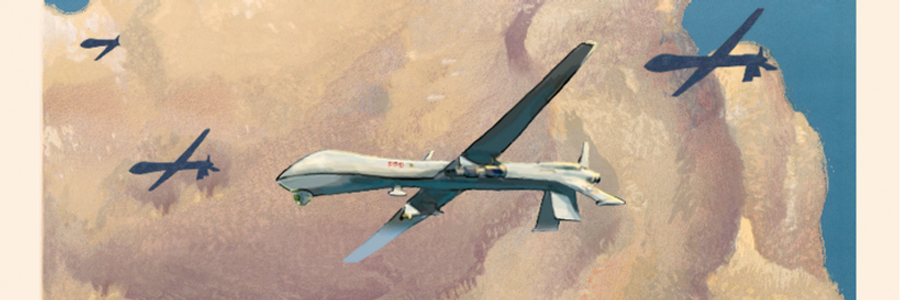
I found it smoking in the weeds. Sleek. Charred. Not dead. Not alive either. Just... humming. Like it was thinking. Or listening.
I didn’t touch it. Not that day. But I didn’t tell anyone either.
You grow up around rules, you learn what not to say. You learn that trouble comes easiest when you didn’t mean anything by it. So I stayed quiet. It wasn’t the first time quiet felt safer than truth.
The next day it was still there. The lens twitched when I moved. I covered it with a tarp and dragged it under the shed. My hands shook the whole time. My knees too.
Weeks passed. The thing didn’t move. Just whirred sometimes. Clicked, like it was remembering something. I tried to forget it. But it was mine now. Not in the way you want something. In the way a lie becomes yours.
I didn’t know it had weapons. I didn’t know anything.
One night—heat, a sound I can’t describe, and the dog next door dropped without even barking. It just dropped like a bag of sand. And I didn’t scream. I just stood there.
That’s when I realized what it was. Or part of what it was.
And by then it was too late to say I hadn’t meant to keep it. Too late to explain that I only hid it because I thought I broke it. That I only stayed quiet because I thought I was in trouble.
No one believes innocence after the damage is done. They say I should’ve told someone. But they weren’t there. They didn’t hear it fall. They didn’t feel the way silence closed around it, and around me.
I didn’t know what it was. I still don’t.
Only that it broke, and I hid it.
Word for the Wanderer
[Transcript excerpt from Word for the Wanderer, Ep. 18, aired June 7, 1998 on KQNM Public Access Channel 14.5. Recorded live from the fellowship basement of Calvary Grace Baptist, Bernalillo County. Minor edits for clarity.]
PASTOR GLENN: Welcome back. You’re listening to Word for the Wanderer, broadcasting from the fellowship hall of Calvary Grace Baptist on channel 14 and a half.
MISS ABBY: Tonight we’re looking at Matthew nine. Jesus walking from town to town, healing, teaching, reaching out to folks who needed him.
PASTOR GLENN: No horse, no gold, no entourage. Just the road and his sandals.
MISS ABBY: We’ve got a caller. Line one. Go ahead friend.
TREY: Yo—hey, y’all shut up. I’m on—
Uh, yeah, hi. Thanks. I just... I heard that part about Jesus walking. That always stuck with me. I didn’t finish Sunday school but I remember he didn’t ride nothing, right? Just walked. Lotta walking.
PASTOR GLENN: That’s right. Miles and miles.
TREY: So like, hear me out. Was Jesus kinda like Johnny Appleseed?
MISS ABBY: Oh my.
PASTOR GLENN: Uh… explain what you mean there son.
TREY: Just—okay. Johnny Appleseed, right? Dude walks around with a bag of seeds. No shoes. No house. Just vibes and fruit trees. Helps out towns. Doesn’t ask for anything. Kinda like Jesus, minus the miracles and, you know, the crucifixion.
MISS ABBY: That’s a very… folksy comparison.
TREY: Thank you.
PASTOR GLENN: That wasn’t a compliment.
TREY: Yeah, well. Both of ’em walk. They both leave something behind. Apples. Hope. Stories. Whatever.
MISS ABBY: Jesus was the Son of God. Johnny planted trees.
TREY: Okay but—hang on—what about Paul Bunyan?
PASTOR GLENN: Lord have mercy.
TREY: No seriously. Big guy, axe, blue ox. Doesn’t walk so much but he reshaped the land. Made lakes just dragging that axe behind him. Changed the whole country. I’m just saying. Jesus changed people, Bunyan changed geography. Both left a mark.
MISS ABBY: Paul Bunyan is a lumberjack myth.
TREY: Sure, but he made stuff better, right? Cleared space. Built things. Not with love maybe, but with effort and power and big swings.
PASTOR GLENN: Lotta destruction in that effort, too.
TREY: Yeah but that’s part of change, right? You break the old thing, make space for the new. Bunyan clears a forest, Jesus clears a heart.
I mean… And then there’s John Henry.
MISS ABBY: Oh, no.
TREY: Steel-driving man. Hammer in hand, racing the machine. Died doing it. Just like Jesus. Sort of. Not the same stakes. Still. He died helping folks.
MISS ABBY: That’s not the same.
TREY: I didn’t say same, I said similar. All these guys: Bunyan, Appleseed, John Henry, Jesus. They all walk.
They carry something, they leave something, and then? Poof. Gone.
MISS ABBY: Jesus ascended to heaven.
TREY: Sure, sure. Bunyan just disappears into the woods. Johnny dies somewhere quiet. John Henry drops dead beside the tracks. Jesus floats up. Either way they leave. No hanging around after.
PASTOR GLENN: You think they’re all the same?
TREY: I think they rhyme, anyway. I mean look. Johnny’s got seeds. Bunyan’s got an axe. Henry’s got a hammer. Jesus has the cross. Kinda feels like the same guy, just showing up in different outfits, doing different jobs. You know?
MISS ABBY: That’s not theology.
TREY: It’s not not theology. I mean, come on, it lines up a little. Doesn’t it?
PASTOR GLENN: It’s something. It’s… something.
TREY: Right? So you feel me?
MISS ABBY: I do not.
TREY: Pastor?
PASTOR GLENN: Miss Abby, Trey seems to think the pulpit is a place to be clever.
Son, Galatians 6 says “God is not mocked.” That means don’t come on here mixing up fables and the Son of God like it’s all the same story. It isn’t.
TREY: I mean, I’m just asking questions.
PASTOR GLENN: No, you’re not. You’re playing. Proverbs says a fool finds no pleasure in understanding, only "in airing his own opinion."
TREY: …Huh. Alright then.
—No, he said “It’s something.” That counts. That totally counts, bro.
MISS ABBY: And we’re moving on.
[CLICK—CALL ENDS]
MISS ABBY: We shouldn’t have let that go on.
PASTOR GLENN: Amen to that. This ain’t a playground. And it ain’t a joke.

Irreconcilable Differences
Set: A dock on Big Bear Lake. A cooler between them. Three pairs of feet dangling over the water. Sun is setting, mosquitoes are testing courage, and the work talk’s drifting off-script.
Judge Morrison took a long pull then let out a grunt that had less to do with the whiskey and more to do with the decades parked on his shoulders.
“The phrase means everything and nothing,” he said. “It’s a catch-all. A mercy. A lie we give them so they can walk away with something noble.”
Linda, the paralegal, snorted. “That’s poetic. But you’re drunk. And I’ve seen your calendar. Half those irreconcilables come in hating each other over a dirty NutriBullet.”
“That's nothing,” said Tom, the divorce lawyer, slapping at a mosquito on his shin. “One of mine last year? She couldn’t stand the way he chewed. Thirty years married, two adult kids, and she tells me—swear to god—‘Every bite sounds like he’s murdering a wet sock.’”
Morrison chuckled. “That one’s not so bad. I had a case back in ’09 where the guy installed a urinal in the kitchen. Said it was efficient. She said it was ‘spiritually corrosive.’ That’s the phrase she used. Wrote it right on the petition.”
Linda leaned back on her elbows. “Y’all are amateurs. I had a couple that split over dog astrology.”
“Dog astrology?”
“She’d hired this pet psychic who said their labrador’s aura was being ‘disrupted’ by the husband's energy. He laughed. She cried. They were in court three weeks later.”
Tom raised his bottle in a toast. “To disrupted dog energy.”
They all drank.
The lake lapped against the dock.
“But like...what is it, really? Irreconcilable differences. Not the punchline kind. The real kind. I mean, outside the court lingo. What makes a person look at someone they used to love and say: ‘Nope. No more.’”
A branch snapped behind them. Then a thud. Then a muffled “I’m fine”.
Tom cleared his throat.
“There was this guy, quiet, wore a tie even in July. They’d been married eighteen years. She said he never yelled, never cheated, never drank, never hit. But she looked so small in that chair, you know? Like she was holding her breath for the past decade. I finally ask her what happened. And she says—”
A fish jumped then vanished in a quiet splash.
“‘He leaves the hallway light on. Every night. Even though he knows I can’t sleep with it. Every night.’”
“That’s it?” Linda asked.
“That’s it,” Tom said. “Only... it wasn’t it. The hallway light was the language. What she meant was, he didn’t see her. Or didn’t care to. She had begged in a thousand tiny ways and he’d ignored every one.”
Morrison nodded slowly. “Death by paper cuts.”
“Exactly.”
Linda sat up. “You think maybe the difference isn’t always what it is but what it represents?”
“Bingo,” Tom said. “Some folks’ll forgive an affair faster than they’ll forgive silence.”
Judge Morrison looked out over the water. “You know what case stuck with me? Real quiet one. No property fight, no custody battle. Just a woman—maybe forty-five, worked nights at a hospital. Her husband came in to sign the papers and started crying halfway through. Said, ‘I thought we were fine. We don’t fight.’ And she said, ‘That’s the problem. We don’t do anything. We’re roommates who nod.’”
He picked at the label on his bottle. “She said the only time she heard him laugh anymore was when he talked to the dog.”
They all sat with that one a while.
The night got colder and the lake went still.
Linda finally said, “So maybe the worst sin isn’t cruelty. It’s indifference. Not ‘I hate you.’ Just... ‘I can’t reach you.’”
Tom gave a slow nod. “That’s irreconcilable.”
Judge Morrison stood, stretched his old back and said, “Well. That or putting a urinal next to the Instant Pot.”
They all laughed harder than the line deserved.
And for a moment the dock was warm.