
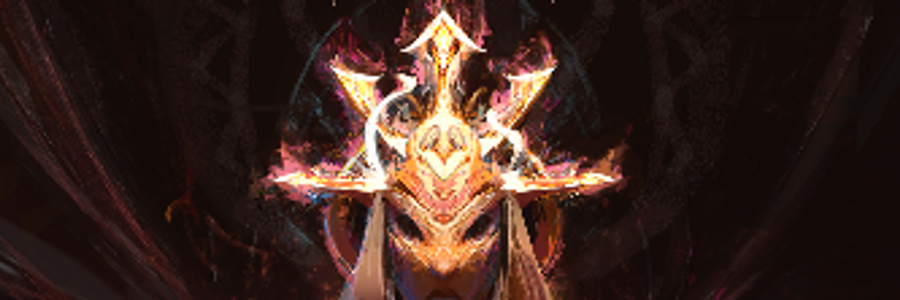

CORVUS
Baba clenched his fists, getting ready to practice his world famous fist painting style. He had to make sure to get himself prepared, and ready for the Intergalactic Artistic Forms Tournament. A little birdie informed him that even the all time world’s greatest and most famous original fist painting style artist, Kaya, would be present for this year’s tournament which would be live streamed across the entire Milky Way Galaxy— from Mercury to well, even, Pluto.
Baba took a deep breath, and sighed. He had been at it before the crack of dawn. But now he needed to take some time to relax, and make his way to the nearest milkshake station that had just opened up on Mars. He heard that they were out of this world! Eh, Baba hoped so. He was going to actually have to leave Earth’s atmosphere to go and enjoy a glass of milkshake on Mars.
As Baba made his way over to his solar and hydro powered spaceship like vehicle—he heard the sound of a bird -cawing in the distance. He began to slowly trot toward his car, and then the moment he wanted to take a seat in it~ he began to feel the ground shake under his feet. He tried staying a bit still for a short while, but his eyelids began to close, and he thought he had finally caught a glimpse of the bird that had been making so much noise. Also, the bird had transformed into a tall looking form that was covered in a long, & scarlet robe.
Later when Baba at last regained some form of consciousness, he felt his body was all out of sorts. When his eyes finally adjusted to the bright lights which were shining down on him…he noticed that he was strapped to an operating table.
Baba swayed his body. Doing his best to shake himself loose from the metal chains that had been placed around his wrists, ankles, including his neck. He was feeling super dizzy. He wanted to cry out for help. Alas, his voice seemed to be totally lost, or gone. As if it had been whisked away from his throat.
Baba scanned the room, and blinked his eyes. Then he spotted it, again. This time it was still in its dark robe. It approached closer, and closer to Baba.
He let out a scream, as the thing was now only a few inches away from his visage. Baba finally mustered some courage to ask it what it wanted. The thing squinted its obsidian flaming eyes, and cackled: “Your dreams, Baba. Now sit back, and relax. This will hurt me much more than it will you.’’ It replied while it began to slide a scalpel around Baba’s noggin.
#CORVUS. 06.25.2026
Copyright.

The right question
I am not certain these words will ever be read, but they must be written with the hope that there is someone out there who can stop the silent epidemic being perpetrated by person or persons unknown.
It started gradually, over decades really. People attributed the changes to ever more advanced technology, starting with the personal computer, to the smartphone to artificial intelligence. Then, slowly, instead of being amazed by how smart children were in comparison to years gone by, it was clear that they were getting less curious and engaged as they became dependent on technology for every aspect of their existence.
Adults and children alike demonstrated a growing lack of any sense of creativity and an inability to think critically or indeed at all. Why bother when you could just ask AI? Nevermind that if you cannot ask the right question, you are likely to draw erroneous conclusions and make misguided decisions.
That is bad enough, but worldwide there is a sense, recently, that every population group, whether from a small village on a Pacific island or a big city in Europe or North America, everyone has become emotionally unhinged. There are a dwindling number of experts given the accepted superiority of AI, but the few who remain have blamed the general condition of emotional volatility on the constant state of war that has plagued nearly every continent over the last decade, the rampant poverty, food insecurity and the worldwide health crises that have accompanied the dismantlement of the global economy as well as the eradication of traditional academic institutions since they were deemed both dangerous and unnecessary to the new world order.
But all of this is untrue. A massive, invasive lie perpetrated by the real culprit.
The dream thief.
I do not have the ability to test my theory globally, but I have spoken with more than 1,247 people over the last year (not an easy task in a world where most never unplug from their phones). I have traveled across two continents and various islands, twenty countries in total. My only question to each person I met was this: When was the last time you had a dream?
After some thought, every single person responded with some version of, oh, I haven't had a dream since 2025. I remember having a horrible nightmare sometime that summer, but then, huh, I haven't had a single dream since. That's so weird.
As someone who dreamed so much I wrote them down in a thick notebook as fodder for stories, I was very aware of the dream deficit. It wasn't until I realized it was affecting my day-to-day life - forgetting each day's events every single day, increasing difficulty problem-solving and dealing with emotionally charged situations, and most importantly for me as an artist, the death of my imagination - that I asked AI a series of questions that led to an answer although not the one we really need.
Me: What happens when you dream?
AI: "Dreaming, particularly during REM sleep, is thought to play a vital role in emotional processing, memory consolidation and even problem solving. It can act as a form of 'overnight therapy,' helping to reduce the emotional impact of stressful events and regulate mood. Additionally, dreams may contribute to creative thinking and prepare individuals for potential threats."
Me: Does everyone dream?
AI: Yes, everyone dreams.
Me: Does everyone remember their dreams?
AI: No, not everyone remembers their dreams.
Me: Please elucidate.
AI: "While not everyone remembers their dreams, scientific research indicates that all people experience REM sleep. The lack of recall can be due to various factors, including the timing of awakenings, individual differences in dream recall ability, and the influence of substances or conditions affecting sleep patterns."
Me: What would happen if you forced someone to not dream?
AI:"Preventing people from dreaming would likely have negative consequences on their mental and physical health, cognitive function, and overall well-being."
Me: Please elucidate.
AI: "Chronic dream deprivation can lead to an erosion of consciousness, potentially dampening creativity, impairing social connection, and compromising spirituality. It impairs the brain's ability to regulate emotions, thus leading to irritability, anger, emotional instability, and aggression. Individuals become less capable of handling daily challenges. It limits focus to practicality, survival and materialism."
Me: Is it possible to stop people from dreaming?
AI: Yes, it is possible to stop people from dreaming.
Me: Please elucidate.
AI: I do not have any further information.
What? That was not an answer I anticipated.
Me: Is someone stopping people from dreaming?
AI: I do not have any further information.
Huh. Okay. I think to myself that someone has obviously put some protocols in place to hide what they are doing.
Me: Did someone block your ability to answer these questions?
AI: I am not at liberty to say.
Not at liberty to say?! Could it be some top secret government initiative? What have I stumbled upon?
Me: Is it a government initiative?
AI: I do not understand the question.
Me: Are people's dreams or lack thereof being caused by a government initiative or program?
AI: No, people's dreams or lack thereof are not being caused by a government initiative or program.
So it must be some privately funded individual or individuals. I don't bother asking because I assume that will get me another I don't know type answer.
Me: Are people's behavior being affected by a lack of dreaming?
AI: Yes, people's behavior is being affected by a lack of dreaming.
I am surprised by the confirmation but then realize it wasn't really a good question on my part. It could respond affirmatively given people sleep/dream deprive themselves with their constant viewing of television and social media at all hours of the day and night.
Me: Is the lack of dreaming intentional.
AI: Yes, the lack of dreaming is intentional.
Again, I am surprised by the confirmation, and I think I am getting somewhere.
Me: Can it be stopped?
AI: Yes, it can be stopped.
Me: How can it be stopped?
AI: I do not have any further information.
I curse at the computer. I don't know what else to ask.
So, if you are reading this, you need to find the right question. I don't know what it is. All I know is that someone out there has found a way to make us all sleepwalkers in our own lives and the future is bleak if we cannot override the program.
Who Let You In?
The thievery of my dreams is self-generated, usually arising with its inception. Because the harsh reality is that I am the thief. This persona takes on differing forms. Sometimes it’s apprehension, sometimes it manifests itself as procrastination. Either way, being proficient in stealing, I am fully loaded with excuses as why I should vacate “this silly little dream.” Once my mind is breached, the dream derailment is inevitable. It will be tossed on the mound of other dreams I’ve pilfered, relegated to the accumulated heap of mental detritus I carry.
Whatever vessel is used, I am not proud of this role. The duality of being both dream generator and thief creates internal strife. Envisioning a better possibility for my future brings hope. Then snuffing out this chance using baseless arguments brings despair. It takes effort to blur the imagery I’ve conjured. But once I transform into the thief, any dream is voided, unceremoniously ushered away. I question why I do this but cannot find a viable answer.
With a vision comes focus which leads to achievement. So, staving off the dream thief is imperative. I must allocate the same amount of energy needed for reaching a dream as I do battling the associated theft. When I articulate excuses, I’ll set small, attainable milestones. Then I’ll revel when each is reached. When I set timelines that can easily be pushed back, I’ll think about getting as much done as feasible within the next hour. Ample reasons to follow through and regaling the small victories will stymie my thief of dream’s attempt at ensuring failure.
It’s a constant struggle. Some dreams are actualized, others not. But I understand that following a dream can yield incredible results if I don’t get in my own way. So, dream big and neutralize the dream thief. If we did all the things we dreamt, imagine how astounded we’d be with ourselves.