Blood Meridian Mini-Series
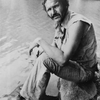
In all the trying and failing adaptations of Blood Meridian perhaps none are as more entertaining or mysterious or pathetic as the effort by Homer Wylder.
He was a high school dropout working as a janitor at a community college when he first heard a lecture on the book and it stunned him like that olden time light.
By then he was living in a studio on a loveseat with his cousin in Atlanta and trying to make short films about liquor store robberies, meth dealers and a series of x-rated films based on Shakespeare’s collection, and documentaries about a local snake handling preacher, a fisherman and hunter, bluegrass bands and moonshiners. He was devouring Larry Brown and William Faulkner, the Bible and Melville, Harry Crews and Flannery O’Connor.
He read Blood Meridian and reread it a couple times within the span of a week and decided he was going to adapt the motherfucker come hell or high water.
To research the story, he mapped out the locations of the story as best he knew fit, stole his grandma’s Ford Ranger and a wad of cash underneath her mattress and drove out to see that world.
In New Orleans he was cut off or kicked out at seven bars on Bourbon Street, and literally thrown onto the streets by bouncers at the Stripper King where he passed out and miraculously woke up come sunshine unscathed by any thief or law.
Nacogdoches is where the Kid meets the Judge for the first time, in a revival tent in the rain. The Judge convinces the congregation to kill the preacher. It is where Wylder saw in his mind the image of the same God who made the world in six days, dancing by a fire with tiny feet, spitting up blood and cutting and cleaning a bear to roast.
He was drunk out of his mind one Saturday night in Galveston, Texas and wandered off the pier and nearly drowned and he saw in dying trance the image of a whale vanishing and returning in the depths of the tides and interchanging its face with that of Judge Holden from the book.
Somehow he washed up on shore gasping out water like a man exorcising demons.
He canoed the Rio Grande from almost El Paso until the ocean; rode horses and motorcycles and bicycles all throughout the Sonoran desert; was arrested in Chihuahua, Mexico and got into a game of Russian roulette in the same city.
He bought peyote at a bead stand before entering Canyon de Chelly and scribbled on the back of his receipts against the canyon rock like a child tracing a sketch and appeared as some crazed lunatic, believing in his state of mind he might be translating the word of God as written upon the stones of earth.
In Yuma he lived and slept on the riverbanks of the Colorado River, an ode to Huck Finn, catching, cleaning and eating bass and frying catfish, seeming himself some human amphibian.
In Mexico, he smuggled cocaine up his anus a handful of times for the cartel, laid down thousands of dollars at strip clubs where he also wrote many scenes on cocktail napkins, married a stripper in Mexico and another in Texas, and then smuggled illegal immigrants across the border. At some point the cartel had a price on his head, which he might have made up or imagined as a sole purpose of getting into character for the script. He wanted to be among the story itself.
All in all he’d end up writing a great portion of the treatment on prison cell toilet paper, cocktail napkins from bars and strip clubs, the earth itself.
It was like some drunkard poet’s backwoods hillbilly sacred scroll written in poisoned blood.
When it was ready to shoot, he hired some college kids in Tucson, Arizona majoring in theater and film to star in the movie and paid them in beer.
Songwriter Thomas Diggs was playing a show around this time at a venue in Tucson where Wylder was drinking and he asked to meet the singer after the show and they drank until it closed and kept drinking at the hotel and Diggs agreed to score the film.
They shot thirty minutes worth of footage in a couple weeks and Wylder threw it away it was so awful. Many couldn’t ride horses, they couldn’t act and Wylder admitted to himself he couldn’t do the job. Everything, his style and direction was off. It looked like bullshit was his official account.
It wasn’t the violence. It was two things, shooting the prose when the prose is so much like a William Blake painting of Hell; and it was also casting the judge. It was impossible.
It put him in a depression terrible enough to try suicide two times, once by pills and once by hanging himself.
This process was five or so years and it was another eight years before he came back to the project.
It was somewhere in Texas after that he met the painter Virgil Day, who at the time, happened to be working on a series of paintings on the Comanche wars.
Wylder had finally realized the vision of the story—while tripping mushrooms in Tucson—was an animated miniseries in which the animation reflected an artwork of the highest grade.
They discussed the style and vision that Wylder had.
The result is a comic book styled storyboard fashioned in the manner of pristine paintings.
A lot of blood red fragile skies as though they might break and collapse, and blood red orange landscapes, great rocks shaped like biblical dragons and whales, cyclopses and minotaurs, lions and different depictions of Satan, the characters so often stenciled in silhouettes like a perfect band of demons.
Splashes upon splashes of blood whip the screen like a sea of flies upon a windshield.
Each episode’s opening sequence with blood violence and the blood paint the screen and ooze and drip into the title: Blood Meridian: or The Evening Redness in the West.
Billy Grail voiced the judge, an alcoholic washed up stage actor who in his experience had seen much of the country. For his voice he used inspiration from Orson Welles, Martin Luther King, Jr., the calm cadences of John C. Reilly and John Malkovich, and the harshness of famous book narrator of westerns, Crayton Hunt, and the soft spookiness of Marlon Brando from Apocalypse Now.
They sat in a McDonald’s in San Antonio using the free Wi-Fi with a laptop to produce the series, drinking Diet Coke and eating chicken nuggets all day for three weeks time.
At the time a producer named Don Leslie owned the rights to the book and Wylder sent him an unsolicited email with the first episode as an attachment.
Leslie was not impressed or amused. He told Wylder what he’s done is illegal and if any of these episodes surface at all he’ll have him sentenced to prison or worse.
Wylder spat out tobacco juice upon reading Leslie’s reply and some of the spit landed on his moccasins. He immediately organized an underground tour in which he’d show the movie for $10 a ticket and it was put on in backyards, dive bars, drive-in theaters, baseball fields and carnivals.
One day during this period, Wylder vanished.
There’s different theories. Officially he killed himself. But some say Leslie John indeed have him killed. Some believe Wylder faked his own death and lives in different countries, writing and publishing film treatments under a pen name.
All that remains from his version of Blood Meridian supposedly is a fifty page treatment somewhere in the deserts of the Southwest or hidden in the attics or buried in the backyard like a murdered body in his hometown in Georgia.